
Employees move toward windows to finish conversations. Clients lose contact in meeting rooms. A workplace designed for collaboration becomes harder to use when people have to hunt for a signal.
A building can work well for one team and poorly for the next. Corporate-issued phones, personal devices, contractors, and visitors make single-provider coverage an incomplete answer.
IT hears about failed calls. Property management hears from tenants. Facilities checks the building. Without a clear service owner, the same issue can circulate without a lasting resolution.

InfiniG brings participating mobile providers into the building on shared indoor infrastructure. Employees and visitors use supported phones with their existing subscriptions, without enrolling in a new service.
For property teams, that creates a consistent approach to a building amenity tenants notice every day. For enterprise IT, it supports mobile communication alongside the office’s existing Wi-Fi and collaboration tools.
Support everyday calls, messages, and mobile applications across deep floor plates and enclosed offices.
Help employees and visiting clients stay reachable in the rooms where decisions get made.
Consider the first impression and the shared spaces that serve multiple tenants and their guests.
Assess facilities offices, service corridors, and below-grade spaces. Parking structures and elevator coverage require specific design review.

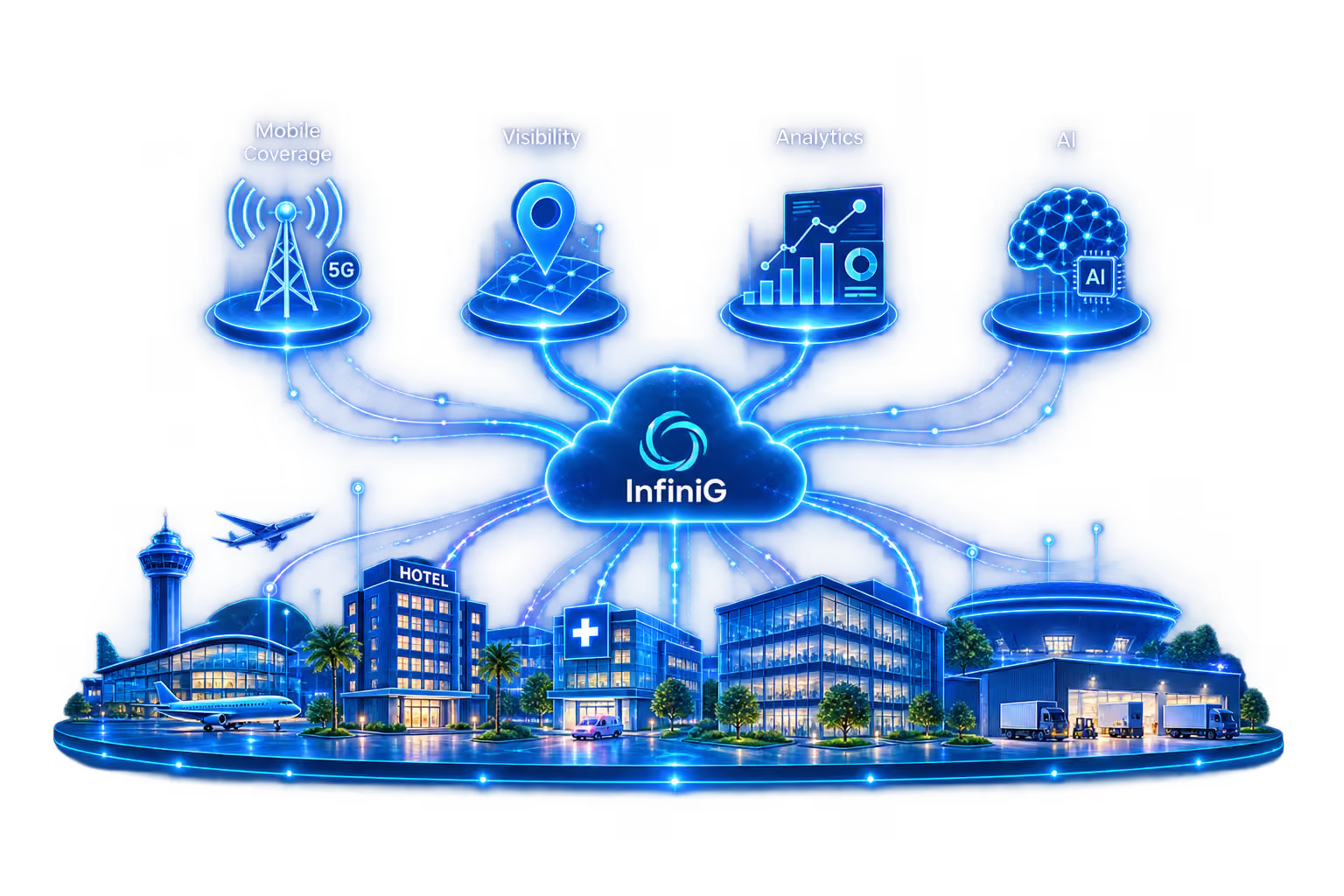
InfiniG coordinates participating mobile providers and manages monitoring and support. InfiniG Insights helps IT and property teams see service performance, usage, and issues across their buildings.
Use that visibility when investigating tenant complaints, planning fit-outs, or adding locations. A common service model gives corporate campuses and office portfolios a more consistent way to manage coverage.

Yes. InfiniG uses shared indoor infrastructure to serve participating mobile providers, so tenants and visitors can use supported phones with their existing subscriptions. Confirm the providers and important device groups during planning. Service availability depends on operator participation and device support at the site.
Wi-Fi calling can help, but the experience depends on the phone, mobile provider, settings, and access to a suitable Wi-Fi network. Visitors may not join the network, and different tenants may have different access policies. Indoor cellular gives supported phones another way to connect through their existing mobile service without a guest Wi-Fi login.
Often, yes, subject to a technical assessment. The design reviews cabling, power, switching, internet capacity, security, and reliability before determining what can be reused. Additional infrastructure or connectivity may be needed. Property management, enterprise IT, and the delivery partner should agree on responsibilities before deployment.
InfiniG manages mobile-provider coordination, monitoring, and cellular support. Site responsibilities, such as power and internet connectivity, are defined in the proposal. InfiniG Insights provides operational visibility according to the service and access level. It does not expose the content of users’ calls, messages, or apps.