
A traveler needs an updated boarding pass. A family is checking a delayed arrival. Someone at baggage claim cannot reach their ride. Coverage gaps turn ordinary travel tasks into extra frustration.
Gate areas fill in waves, and delays can keep passengers in the terminal longer. Coverage planning needs to account for crowded holdrooms and busy arrivals, as well as quieter parts of the building.
Airport IT supports many tenants, systems, and service providers. Adding indoor cellular should come with clear operational ownership and a scope that fits the terminal’s needs and resources.

InfiniG evaluates a shared indoor cellular network for participating mobile providers, sized around your terminal’s layout and demand. Supported phones use their existing mobile service, helping passengers stay connected without first joining airport Wi-Fi.
For mid-sized airports, the starting point is a site-specific assessment: coverage gaps, busy-hour demand, available infrastructure, and mobile-provider requirements. That assessment establishes where the service fits and what the deployment should include.
Help passengers retrieve travel information and coordinate with companions as they move through the terminal.
Plan for waiting passengers, flight delays, and the mobile demands of terminal staff and concession teams.
Support the calls, messages, and app access travelers need when reconnecting with family or arranging onward travel.
Include indoor workspaces used by airport administration, airline representatives, and service partners. Evaluate curbside and other outdoor areas separately.

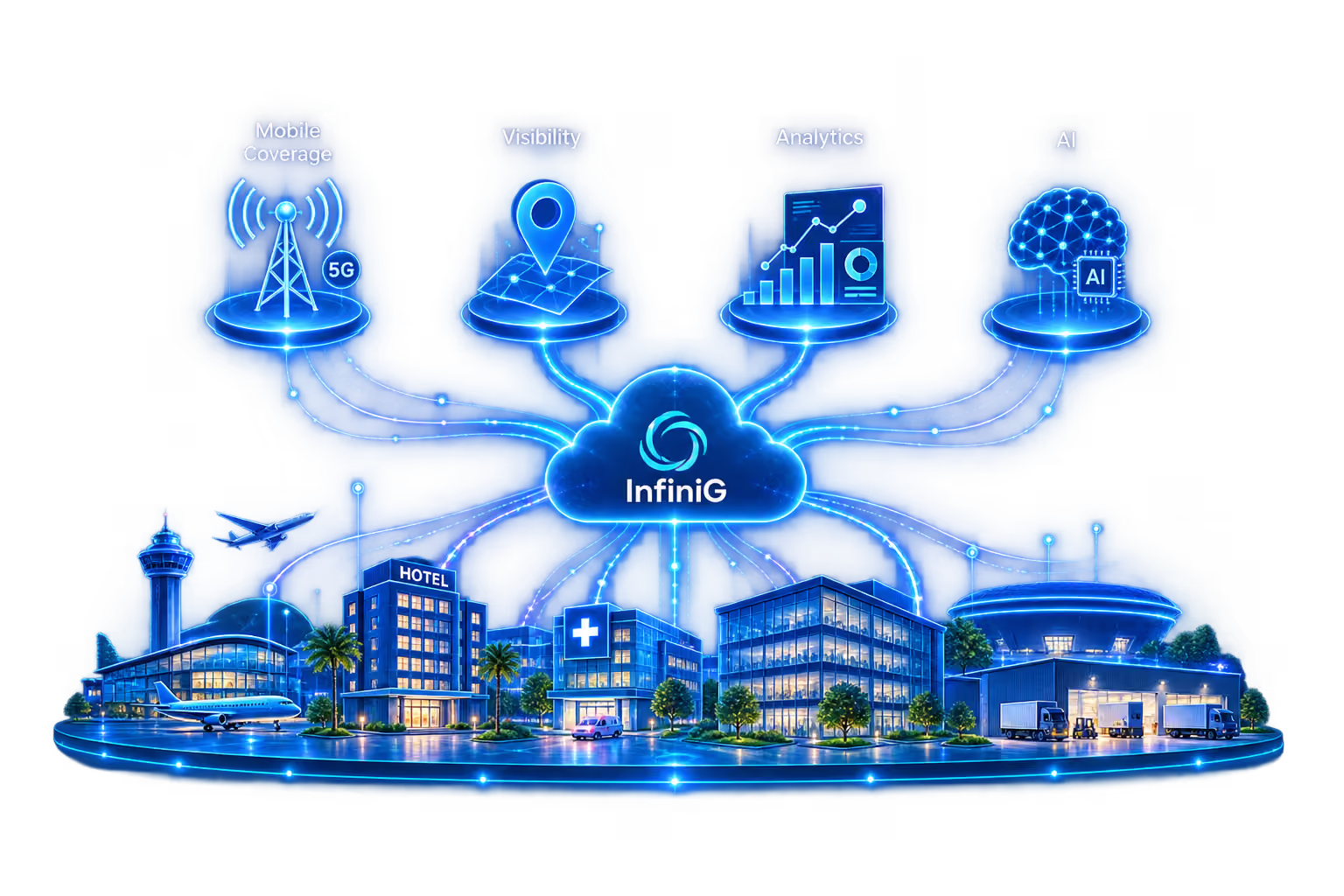
InfiniG manages mobile-provider coordination, service monitoring, and support. InfiniG Insights gives airport IT visibility into cellular performance and usage to help identify issues and plan for changing terminal demand.
Coordinate deployment with terminal access requirements and operating schedules. Define responsibilities for internet connectivity, power, maintenance access, and escalation before the service goes live.

It can be, following a site assessment. Terminal layout, busy-hour demand, available spectrum, internet connectivity, and mobile-provider participation determine suitability. A particularly congested location may warrant evaluation of a CBRS Priority Access License for additional interference protection. MCaaS is not a universal replacement for every extremely high-density venue solution.
Yes. Supported phones use their existing mobile subscriptions when their provider participates at the site. No InfiniG app, replacement SIM, or Wi-Fi login is required. Service availability depends on the provider, device, subscription, and site configuration; confirm support for the passenger groups important to your airport.
Plan around the busiest expected conditions, not only average passenger counts. Review flight schedules, gate occupancy, delayed-passenger dwell time, staff usage, and expected mobile data demand. InfiniG uses the site assessment to scope radio coverage and supporting connectivity, then monitoring can help identify changes that warrant a capacity review.
No. Indoor coverage for passenger and staff phones serves a different purpose. Air traffic communications, public-safety radio, airside systems, and other specialized operational networks retain their own requirements. Outdoor areas and private cellular applications must be evaluated separately from the terminal’s public mobile coverage.