A student misses a call in a residence hall. A parent cannot reach someone on a campus visit. A faculty member steps outside to finish a conversation. Weak indoor service makes everyday campus life less convenient.
Historic masonry, energy-efficient construction, interior classrooms, and lower levels can all create coverage gaps. A signal check on the quad does not reflect the experience inside a library or student center.
Students, faculty, contractors, and visitors bring different devices and mobile providers. IT and facilities teams need a coordinated approach that can work across departments, buildings, and capital projects.

InfiniG brings participating mobile providers indoors through shared cellular infrastructure. Supported phones connect using existing subscriptions, without a new SIM or a guest Wi-Fi login.
Give students, faculty, staff, and visitors a more consistent way to stay reachable. For K–12 schools, focus on staff and visitor communication while respecting local student phone-use policies. Campus Wi-Fi continues to support teaching, learning, and institutional applications.
Support everyday calls, messages, and mobile access where students live, including shared lounges and interior rooms.
Assess lecture halls, classrooms, faculty offices, study spaces, and lower levels where outdoor signals may not reach.
Include dining areas, admissions, advising, and other indoor spaces that bring students, families, and visitors together.
For K–12 and university buildings, include administrative offices, staff rooms, and facilities workspaces. Outdoor routes, stadiums, and major event venues need separate evaluation.

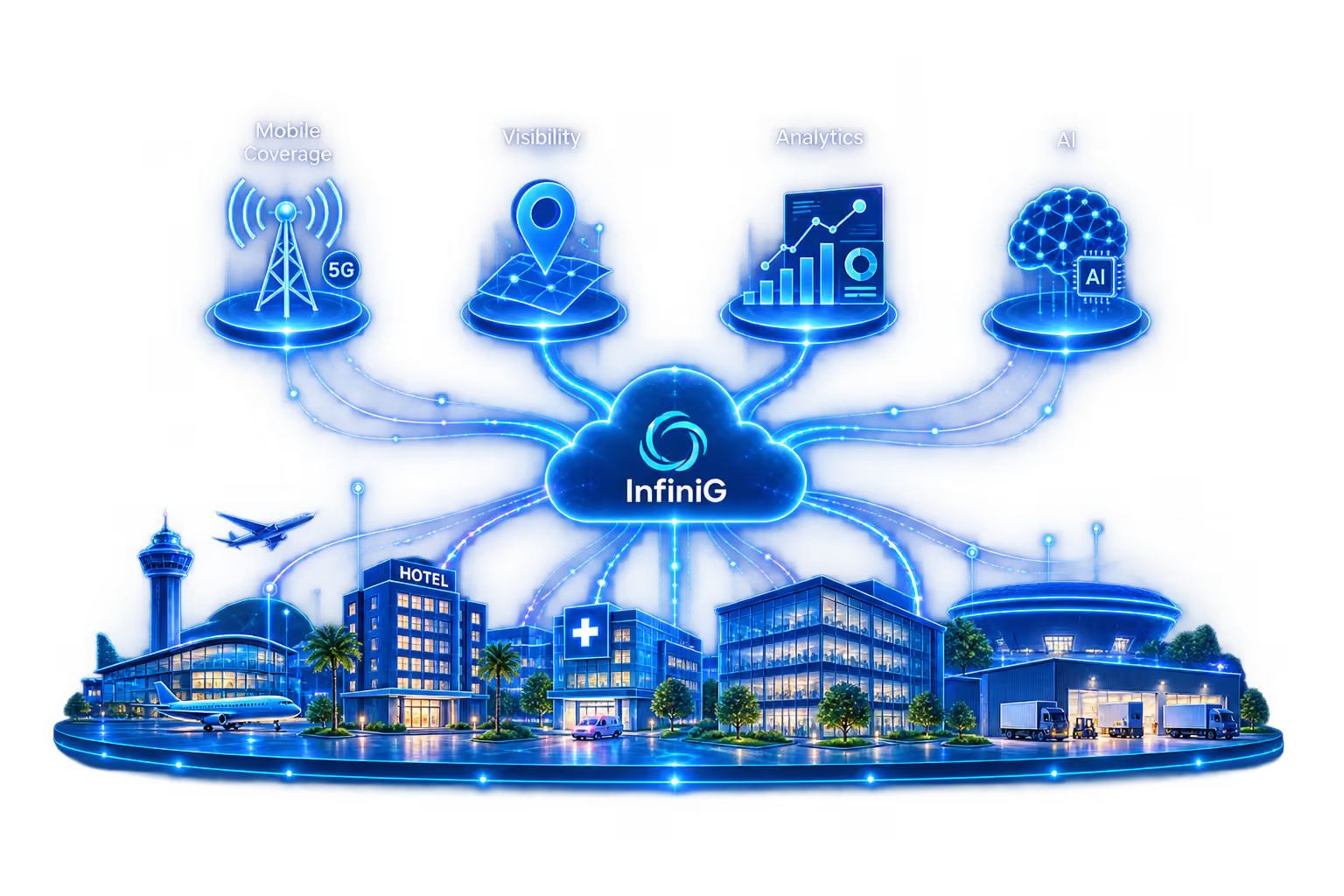
InfiniG handles participating mobile-provider coordination, monitoring, and ongoing support. InfiniG Insights gives your team visibility into cellular service performance and usage across buildings.
Use a common approach to prioritize coverage gaps and coordinate deployment with academic calendars, residence-hall access, and construction schedules. Each building is assessed for its layout, demand, and supporting infrastructure.

Campus Wi-Fi supports learning, research, and institutional applications. Indoor cellular adds mobile service for supported phones using participating providers, without requiring a campus or guest Wi-Fi login. It can help students, faculty, and visitors stay reachable where outdoor cellular signals do not penetrate. The two networks serve complementary needs.
These buildings can be included in a campus deployment. Each requires assessment of construction, floor plans, occupancy, mobile-provider participation, and supporting infrastructure. Residence halls, libraries, and lecture halls can have different usage patterns. Outdoor campus routes, stadiums, and large event venues require separate evaluation.
Yes. InfiniG’s Murray City School District customer story describes its deployment at Parkside Elementary, where indoor AT&T and T-Mobile service enabled staff to make mobile 911 calls without leaving the building. This is a K–12 example. A university deployment would be assessed for its own buildings, demand, and participating mobile providers.
Yes. An institution can prioritize buildings with the most pressing coverage gaps and extend the service through later projects. Each building still needs its own assessment and service validation. Coordinate work with academic calendars, building access, and planned renovations. Campus safety communications and school phone-use policies retain their own requirements.