
A patient wants to update family. A visitor needs to coordinate a pickup. Someone in a waiting area is trying to take a call from work. Poor mobile service adds frustration to an already demanding day.
Thick walls, interior corridors, lower levels, and additions built at different times can create uneven service. Coverage in the main lobby does not tell you what people experience in a patient tower or outpatient building.
Staff, visiting clinicians, contractors, and families arrive with different phones and mobile providers. When service fails, IT and facilities teams need a way to investigate and resolve coverage issues alongside their many other responsibilities.

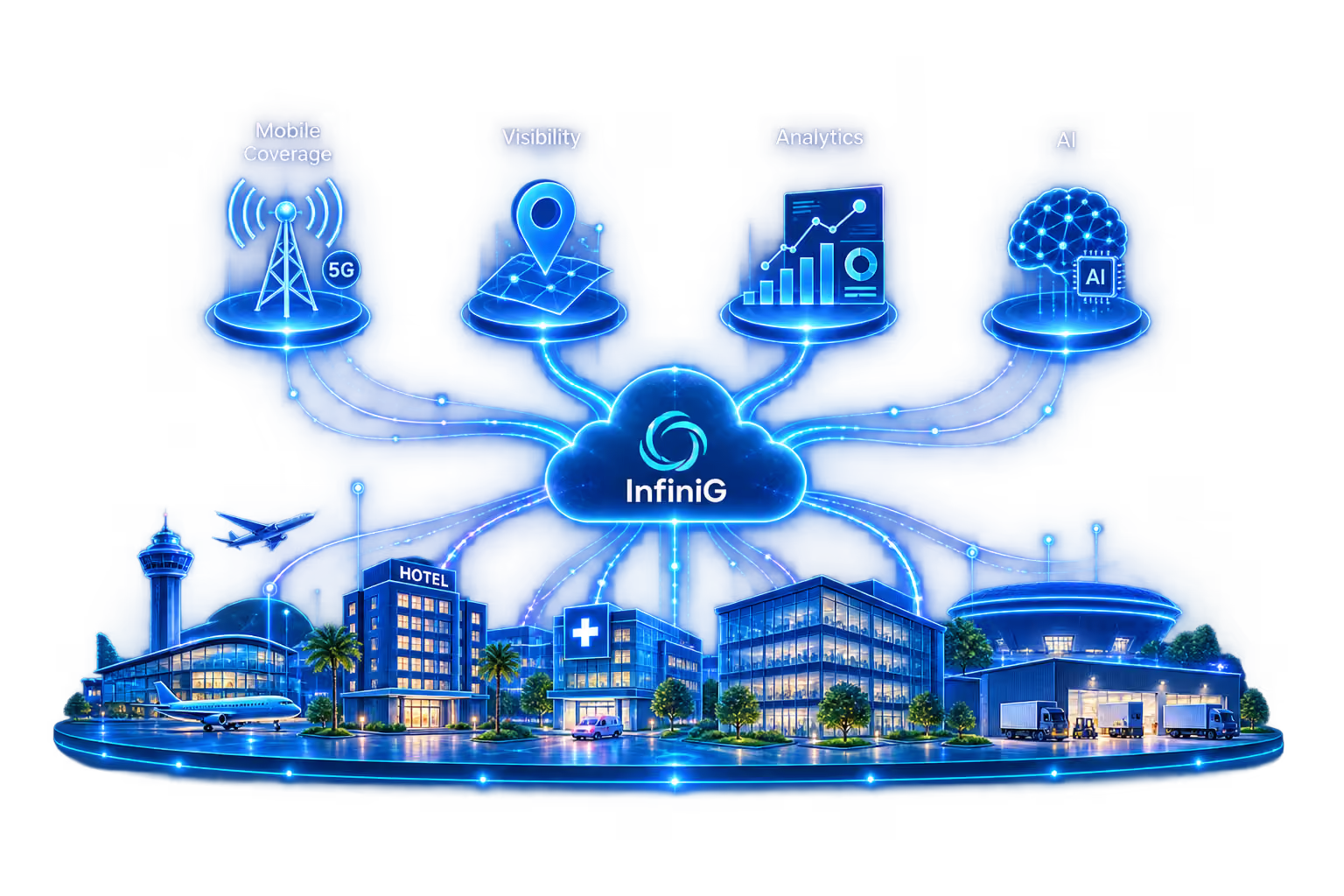
InfiniG brings participating mobile providers indoors through shared cellular infrastructure. Patients, visitors, and hospital personnel use supported phones with their existing subscriptions, without signing in to guest Wi-Fi.
Design the service around the hospital’s buildings and the people who use them. Clinical systems, approved staff messaging, and medical devices retain their own connectivity and security requirements.
Help patients and loved ones stay in touch during a hospital stay or a long wait.
Support everyday calls and access to mobile information as people arrive, attend appointments, and arrange to leave.
Include the places where hospital personnel, visiting professionals, and support teams need ordinary mobile service.
Assess service beyond public-facing areas, including indoor routes between departments. Shielded rooms and restricted clinical spaces require a separate suitability review.

InfiniG coordinates participating mobile providers and manages cellular monitoring and support. InfiniG Insights helps your team understand service performance and usage across hospital buildings.
Plan surveys and installation around patient care, access restrictions, and the hospital’s infection-prevention procedures. Agree on responsibilities for power, internet connectivity, resilience, and escalation as part of the deployment scope.

Yes. Supported phones use their existing subscriptions when the mobile provider participates at the hospital. Patients and visitors do not need an InfiniG app, a replacement SIM, or a guest Wi-Fi login. Confirm the relevant mobile providers and device groups during planning.
No. InfiniG’s indoor mobile coverage supports cellular service on mobile phones. Clinical Wi-Fi, paging, medical devices, and approved care-team communication systems have separate requirements. Any proposed clinical application needs its own assessment by the hospital’s appropriate technical, security, and clinical teams.
InfiniG’s delivery partner and installer coordinate the physical installation with the hospital; InfiniG handles network configuration, mobile-provider integration, and service validation. Ask the project team to incorporate patient-care schedules, access restrictions, and hospital infection-prevention procedures into the work plan. Timing and disruption depend on the site.
Yes. A hospital organization can use a common service approach across priority buildings while assessing each building’s layout, demand, infrastructure, and participating providers. InfiniG manages ongoing cellular monitoring and support. Outdoor routes between buildings, backup power, and internet resilience need explicit evaluation within the project scope.